Oil Tank Removal Process
A complete removal moves through records and access review, product recovery, tank cleaning, physical removal, condition verification, disposal and closeout. Underground work adds excavation, soil decisions, backfill and restoration.
A complete removal moves through records and access review, product recovery, tank cleaning, physical removal, condition verification, disposal and closeout. Underground work adds excavation, soil decisions, backfill and restoration.
This guide is organized around the decisions Brooklyn owners actually face. It is general service information, so current project requirements should be confirmed using the property, tank and scope—not assumptions from another county or a generic national cost table.
Before the crew arrives
- Gather tank records, permits and prior test reports
- Photograph the tank, label, fill, vent and access route
- Use down or transfer remaining oil when practical
- Clear personal items without disturbing the system
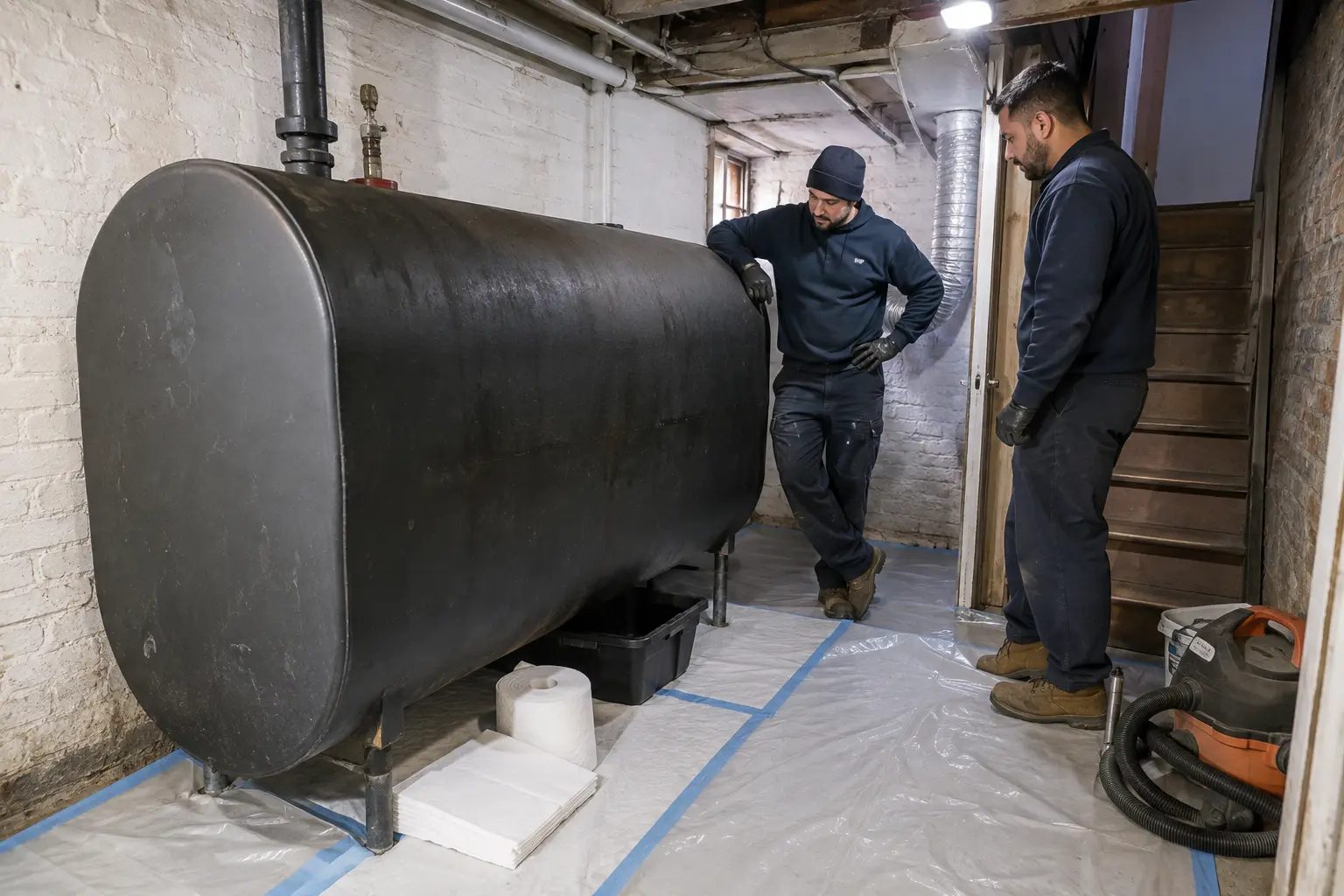
A complete removal moves through records and access review, product recovery, tank cleaning, physical removal, condition verification, disposal and closeout. Underground work adds excavation, soil decisions, backfill and restoration.
Typical basement removal sequence
- Protect the route through the building
- Pump oil and remove sludge
- Disconnect and clean the tank
- Remove intact or section the cleaned tank
- Close obsolete lines and clean the area
Brooklyn properties can add narrow access, occupied spaces, attached structures, paved yards and limited equipment staging. Put assumptions and exclusions in writing before work begins.
Typical underground sequence
- Mark utilities and establish equipment access
- Expose, pump and clean the tank
- Remove the tank and inspect the excavation
- Sample suspect soil when appropriate
- Backfill, compact and restore the surface
Brooklyn properties can add narrow access, occupied spaces, attached structures, paved yards and limited equipment staging. Put assumptions and exclusions in writing before work begins.
Oil Tank Removal Process FAQs
What is the short answer about removal process?
A complete removal moves through records and access review, product recovery, tank cleaning, physical removal, condition verification, disposal and closeout. Underground work adds excavation, soil decisions, backfill and restoration.
Why can Brooklyn properties require extra planning?
Brownstone cellars, narrow stairs, small yards, attached buildings, shared access, concrete coverage and street logistics can change the work method and restoration.
What should I send with a quote request?
Send the property address, tank and piping photographs, access photographs, known capacity, remaining fuel, project timing and every available permit, test or closure record.
Should I rely on an online price?
Use online ranges only for early budgeting. Tank location, access, remaining product, excavation, sampling, contamination and restoration can change the actual written quote substantially.
Need an answer for the actual Brooklyn property?
Send photos, records, access details and desired timing.