Remove or Abandon an Oil Tank?
Removal eliminates the physical tank and allows direct observation of the surrounding area. Closure in place may avoid disruptive excavation but leaves the vessel on the property. Access, structural risk, documentation and future transaction concerns should drive the decision.
Removal eliminates the physical tank and allows direct observation of the surrounding area. Closure in place may avoid disruptive excavation but leaves the vessel on the property. Access, structural risk, documentation and future transaction concerns should drive the decision.
This guide is organized around the decisions Brooklyn owners actually face. It is general service information, so current project requirements should be confirmed using the property, tank and scope—not assumptions from another county or a generic national cost table.
Removal may be favored when
- The tank is accessible without disproportionate damage
- The owner wants direct evidence of surrounding conditions
- A buyer, lender or insurer wants removal records
- The property will be redeveloped or excavated
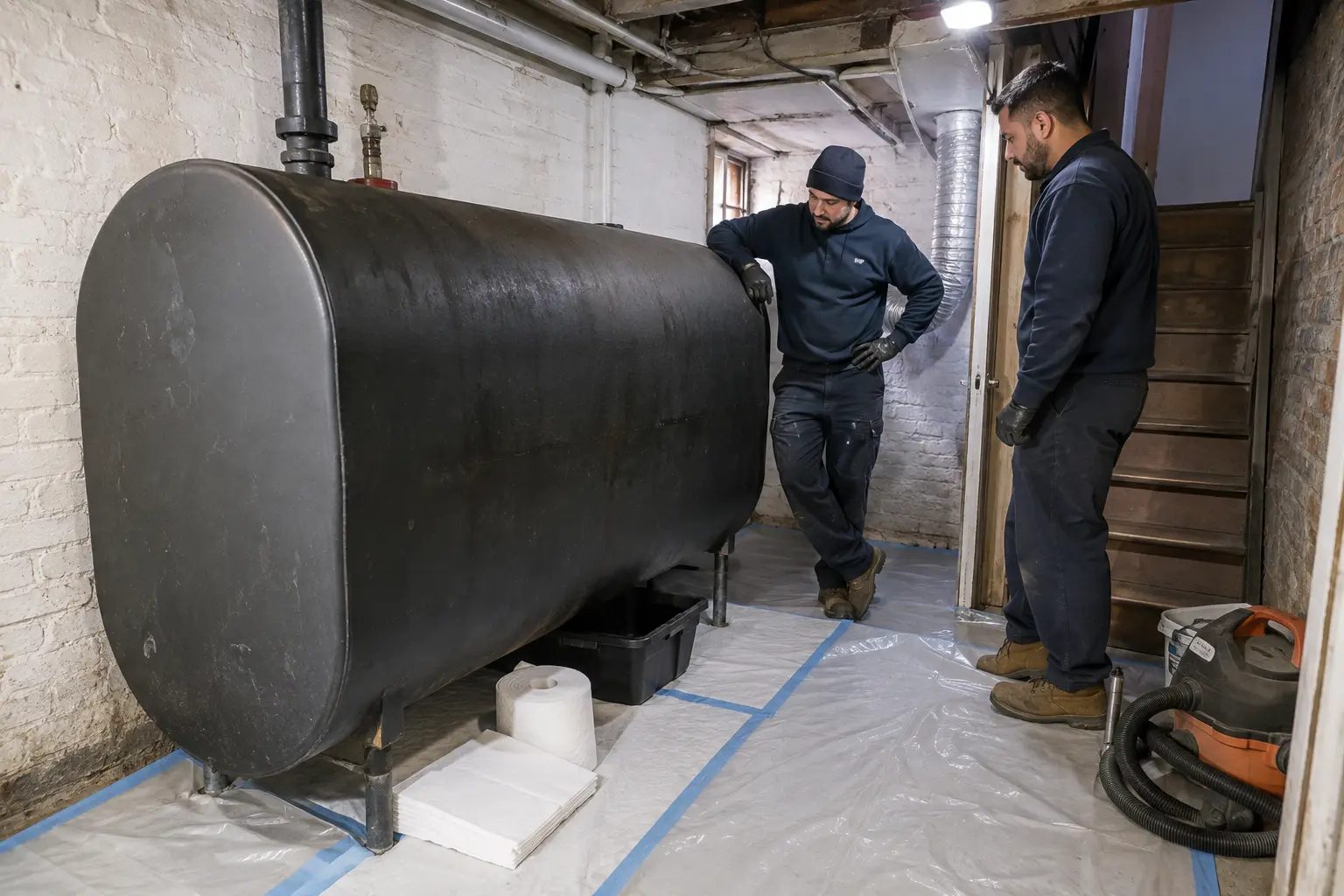
Removal eliminates the physical tank and allows direct observation of the surrounding area. Closure in place may avoid disruptive excavation but leaves the vessel on the property. Access, structural risk, documentation and future transaction concerns should drive the decision.
Closure in place may be considered when
- The tank lies beneath a structure or major slab
- Excavation could threaten a foundation or shared area
- The applicable authority accepts an approved closure method
- The owner understands future disclosure and record needs
Brooklyn properties can add narrow access, occupied spaces, attached structures, paved yards and limited equipment staging. Put assumptions and exclusions in writing before work begins.
Compare written scopes
- Cleaning and product recovery
- Fill or closure material
- Piping and fill-port treatment
- Inspection and soil evaluation
- Affidavit, photographs and final report
Brooklyn properties can add narrow access, occupied spaces, attached structures, paved yards and limited equipment staging. Put assumptions and exclusions in writing before work begins.
Remove or Abandon an Oil Tank? FAQs
What is the short answer about remove vs abandon?
Removal eliminates the physical tank and allows direct observation of the surrounding area. Closure in place may avoid disruptive excavation but leaves the vessel on the property. Access, structural risk, documentation and future transaction concerns should drive the decision.
Why can Brooklyn properties require extra planning?
Brownstone cellars, narrow stairs, small yards, attached buildings, shared access, concrete coverage and street logistics can change the work method and restoration.
What should I send with a quote request?
Send the property address, tank and piping photographs, access photographs, known capacity, remaining fuel, project timing and every available permit, test or closure record.
Should I rely on an online price?
Use online ranges only for early budgeting. Tank location, access, remaining product, excavation, sampling, contamination and restoration can change the actual written quote substantially.
Need an answer for the actual Brooklyn property?
Send photos, records, access details and desired timing.