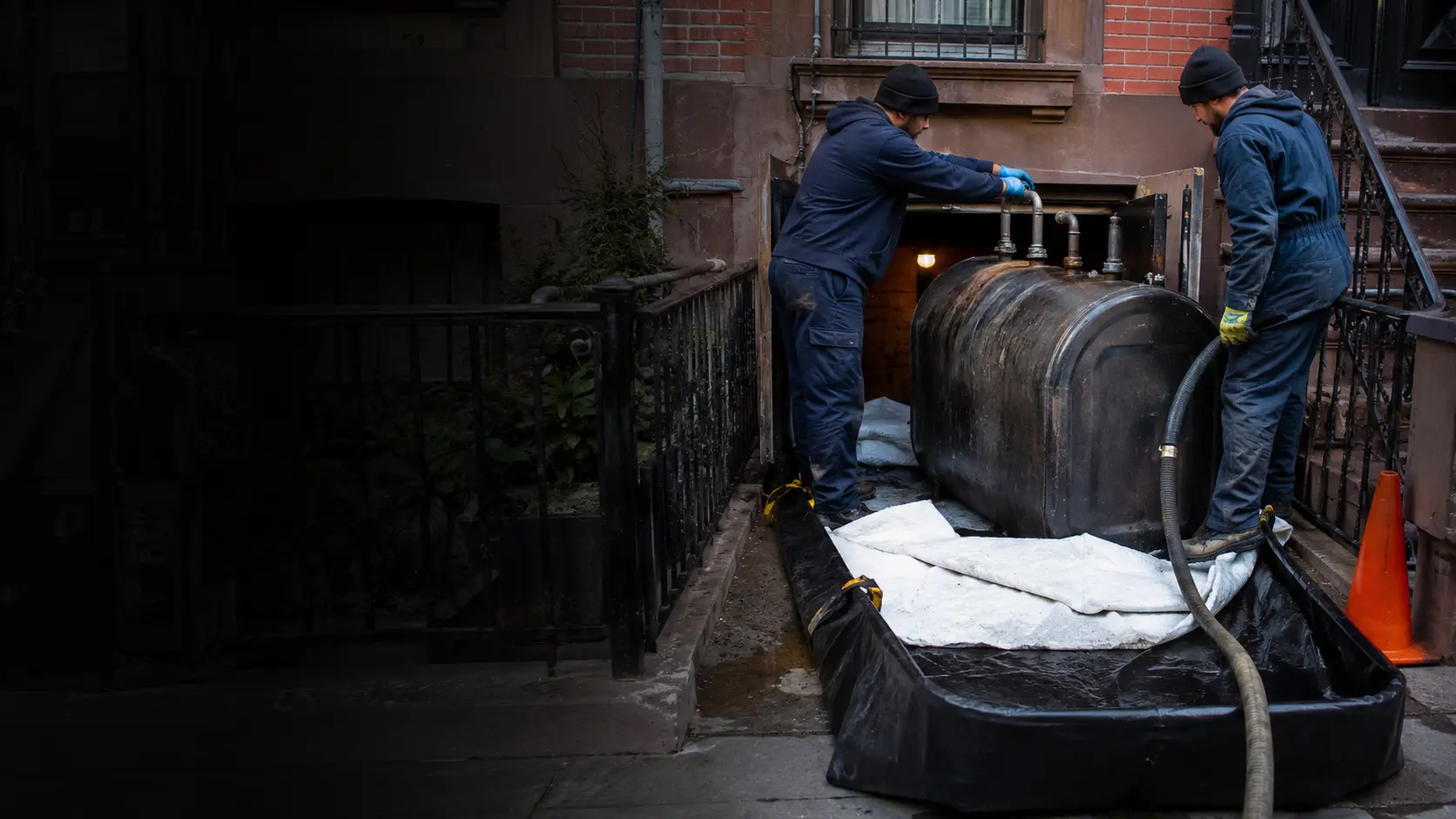
Representative service image, not a claimed customer project.
What this service covers
Low-rise homes, paved yards and mixed basement access create specific removal and restoration decisions. A useful scope begins with the tank type, capacity if known, location, access route, remaining fuel, connected piping, reason for the work, and any prior permits or closure records. Brooklyn projects can involve cellars, finished basements, rowhouses, narrow side yards, attached garages, sidewalks, or excavations close to structures.
Make the written scope specific
Ask who handles remaining oil, cleaning, cutting, excavation, transport, disposal, permits, inspection, sampling, restoration and final documentation. A complete line-by-line scope is more useful than a low verbal number with major exclusions left unstated.
When owners usually investigate
- Heating conversion or boiler replacement
- Visible corrosion, staining, odor, or suspected leakage
- Property purchase, sale, refinance, or insurance review
- An unknown fill pipe, vent, patch, or tank record
- Need for basement space or removal of unused equipment
How the work is scoped
First, records and site conditions are reviewed. Next, the tank and surrounding area are evaluated without unnecessary disturbance. A written scope should separate straightforward closure or removal from contingency work if contaminated soil, inaccessible piping, structural constraints, or additional agency requirements are found.
- Send photos, address, tank details, and existing records.
- Confirm tank location, access, remaining product, and connected equipment.
- Determine which qualified trades, filings, tests, and inspections apply.
- Compare the written scope, exclusions, restoration, documentation, and contingencies.
- Retain invoices, manifests, test results, permits, and closeout records.
Quote factors
Price is affected by aboveground versus underground location, capacity, product volume, stair and doorway clearance, whether controlled cutting is needed, excavation and pavement restoration, utility conflicts, sampling, contamination, agency filings, parking and curb logistics, and the documentation requested. Online averages are not a substitute for a site-specific written quote.
Safety and reporting
Do not cut, move, pump, excavate, or enter a tank yourself. If you smell strong petroleum vapors, see an active release, or suspect exposure, leave the affected area, avoid ignition sources, and contact appropriate emergency and environmental authorities. NYSDEC publishes spill guidance and the Spill Hotline at 1-800-457-7362.
Related planning: all oil-tank services, Brooklyn owner guides, and online estimate request.