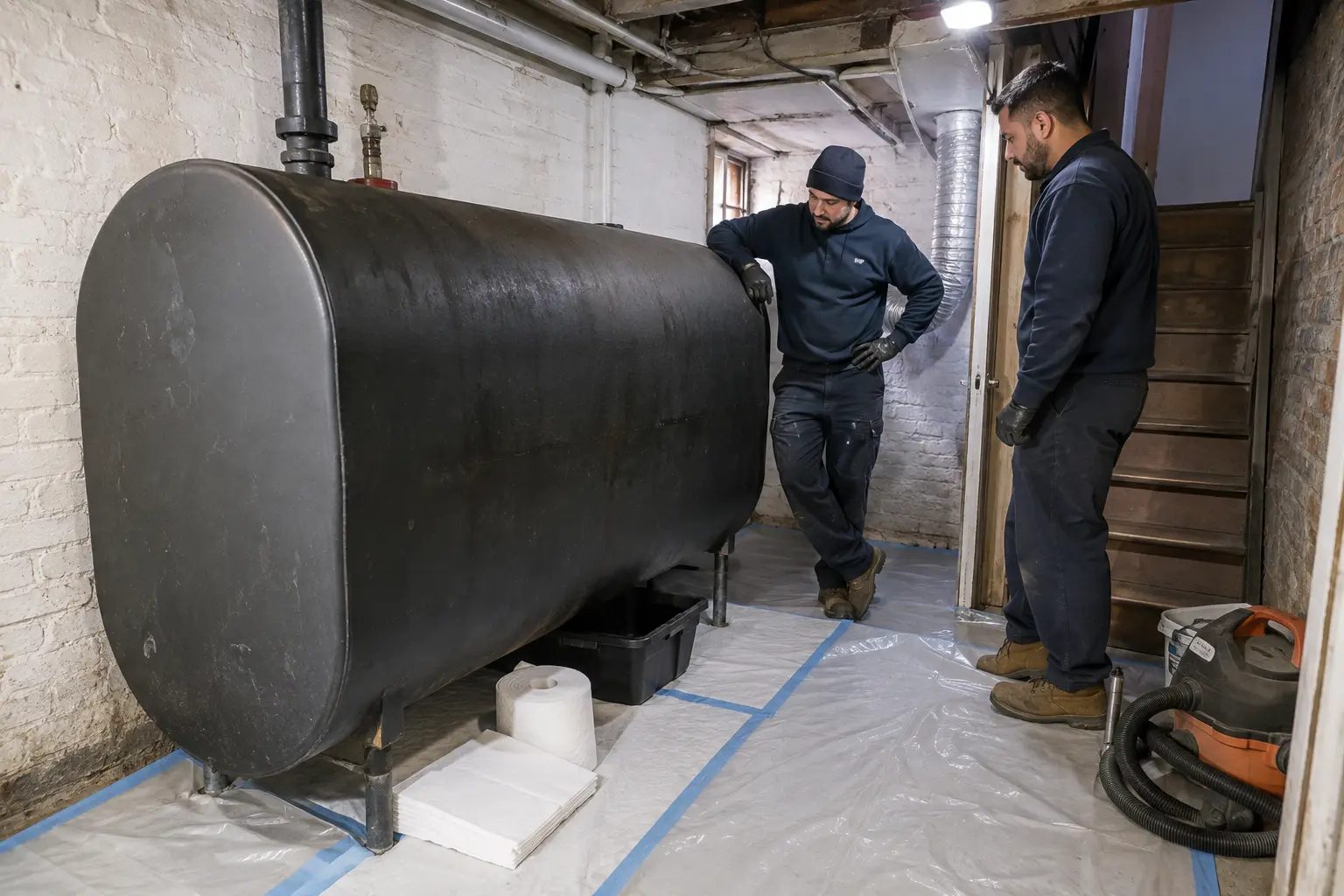
Representative service image. It is not presented as a completed customer project.
Service scopeWhat groundwater testing near oil tanks covers
Investigation when petroleum may have reached groundwater, requiring a sampling approach different from shallow soil testing.
The useful starting point is not simply “remove the tank” or “test the tank.” A complete request identifies the tank’s location, estimated capacity, current use, remaining product, connected piping, access route, reason for the work and any existing permits, reports or spill records. That information lets the quote separate standard work from testing, restoration or environmental contingencies.
When property owners usually need this service
- Deep release or saturated soil is encountered
- Petroleum sheen or odor appears in water
- Basement sump or excavation collects suspect water
- Agency requests groundwater information
What to expect from the process
- 1Review geology, depth and prior soil data
The first step confirms the property conditions and prevents assumptions from driving the quote.
- 2Select temporary or permanent sampling points
This step should be identified clearly in the written scope, including who owns it and what evidence is delivered.
- 3Install or access sampling location appropriately
This step should be identified clearly in the written scope, including who owns it and what evidence is delivered.
- 4Collect samples using controlled methods
This step should be identified clearly in the written scope, including who owns it and what evidence is delivered.
- 5Analyze target petroleum compounds
This step should be identified clearly in the written scope, including who owns it and what evidence is delivered.
- 6Interpret flow direction, extent and next steps
This step should be identified clearly in the written scope, including who owns it and what evidence is delivered.
Brooklyn conditions that can change the plan
Brooklyn work may involve brownstone cellars, attached and semi-attached homes, multifamily mechanical rooms, narrow side passages, shared hallways, finished basements, paved yards, sidewalk staging and limited truck or excavator access. The proposal should show how the crew plans to protect occupied areas and move equipment or tank sections between the work area and street.
For subsurface or spill-related work, the tank task and the environmental task should be priced and documented separately. Finding suspect soil does not automatically define its extent; it creates a need for observation, sampling or a staged cleanup decision.
What changes the quote
- Depth to water and drilling access
- Number of points and sampling rounds
- Water handling and disposal
- Laboratory methods and turnaround
- Need for monitoring or treatment
Ask whether labor, remaining oil, sludge, cutting or rigging, excavation, testing, permits, hauling, disposal, backfill, compaction and finish restoration are included. A low base number can be misleading when those items are allowances or exclusions.
Records worth keeping
- Boring or well logs
- Sampling records and laboratory reports
- Water-level data and location map
- Investigation conclusions
Property records matter because the next buyer, lender, insurer, heating provider or renovation contractor may not know what happened. Photographs and third-party records are more useful than a verbal assurance years later.
How to prepare for an estimate
- Photograph the full tank, label, gauge, legs or supports
- Photograph fill, vent, filter, valves and visible supply piping
- Show every stair, doorway, gate or yard route
- Gather permits, invoices, test reports and spill correspondence
- Note recent deliveries, remaining fuel and desired timing
Do not cut, move, excavate or enter a tank yourself. For active releases, strong petroleum vapors, fire or immediate exposure concerns, leave the affected area and contact appropriate emergency and environmental authorities.
Related Brooklyn services and guides: oil-tank cost factors, permit and documentation guide, and photo-based quote request.